The Dealership of the Future Starts with Customer Data with Jon Rossi
John: [00:00:00] We're going to start seeing more of those private equities. We're going to see. I think Komatsu is setting the stage for other OEMs to say, hey, you know, Komatsu is able to buy the territory, support it better than the dealer principal. The question of is my data is safe with one OEM acquiring this company? Is my data truly safe?
Remi: [00:00:24] Technology is reshaping the equipment dealerships world. The leaders who see it are setting the pace. I'm Remi Schmaltz, CEO and founder of Brilliant Harvest, an AI powered help desk designed to strengthen the dealership customer relationship. Built on iron is a place where we explore how the most innovative leadership teams are adapting to new technologies and ideas. Every episode, I sit down with the dealership leader who's navigating real challenges, staffing pressures, rising customer expectations, and the technology that's starting to change how all of it works. These conversations are about more than technology and tools. They're about building something that lasts. Thanks for joining the conversation. Let's dive in.
Remi: [00:01:06] Well, welcome to Built on Iron powered by Brilliant Harvest. Uh, you know, often when we talk about heavy equipment and in the oagr construction industry, our minds right away go to the big pieces of equipment, you know, the 500 horsepower tractor, the precision of a planter, or, you know, an excavator moving a bunch of earth. But if you look under the hood of, you know, the world's most profitable dealerships in 2026, I think you'll quickly realize that the battle isn't being fought with iron. It's being fought with data. And, you know, for decades, I think a lot of dealerships and continue to struggle with finding the right people, maintaining them and communicating effectively, uh, with their customers to be able to provide really good service to them.
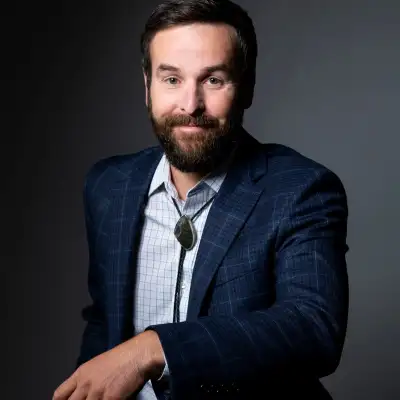
Remi: [00:01:54] And today, our guest I'm really excited about because, you know, he didn't just notice some of the challenges in the market. He took action around it. And so John Rossi is the past founder and former CEO of Modern, which is a two-way customer communication and texting platform specifically built for heavy equipment and rental operations. And, you know, he really took the industry from, you know, a traditional, like voicemail phone tag back and forth to really cut through that to be able to, uh, get new work orders or changes on work orders approved quickly. And, you know, he had massive distribution of that technology across the network in North America with dealerships like Vermeer and Cat. And he didn't stop there, though, because, you know, even though after the acquisition of that business, uh, John recently announced, uh, him founding and being the managing director of the Digital Iron Group, this is a market intelligence platform tracking the shifts, capital and investments in tech, reshaping the heavy equipment landscape. John, it's an absolute privilege to welcome you to Built on Iron.
John: [00:03:09] Appreciate it, Remi. Thanks for having me on.
Remi: [00:03:12] Yeah, yeah. Well, it's going to be a fun conversation. And you know, I like to kick things off, you know, with just kind of an opener. And, you know, you've seen over the last couple of decades the good bad, and maybe some of the ugly ness of like technology in dealerships. And you know, what was the point? Like if you kind of rewind back to prior to starting Modern, what was this moment in which you're like, I'm going to solve this problem. I'm going to create a business and go all in. And like was it an actual experience you had at a dealership, or was it something else or what got you into this?
John: [00:03:54] Uh, yeah. Uh, so funny enough, I was a, um, customer of a dealership, although it was not a Motive dealership. And the problem was, is back in 2012, they didn't have Lyft. They didn't have Uber. They didn't have Ride Share. So if you dropped your car off, you either had to be within the radius of like three miles for the dealership to have their shuttle take you back to your house, or you had to take a yellow taxi back to your house. But amongst myself, in the waiting area of the dealership, everyone had one of these. So the the premise initially was, let's create a better way for automotive service departments to text to service customers. Now that was a short-lived journey. We realized that it takes a lot of money to pay to play, to get integration into systems at the time that automotive dealerships were using. During that journey, we made the pivot and the decision to try and see if this was something that would live in the heavy equipment world. Now, the reason why I thought it was a good choice to try the heavy equipment world is because, looking back on the days when I worked for the Komatsu dealership, I realized that all of our locations had one service administrator, 1 or 2 service advisors, and a service manager. And I just remember that the nonstop calls first thing in the morning, whether it was shop service or field service, everyone wanting to know, when can you come out? When can I bring something in? Or what's the status of the repair? And immediately it, it triggered that yes moment where looking at a dashboard that was updated by the end user, it would solve that problem. So we started with our first beta customer. And absolutely it was the right time, right market, right product. And we work with them to refine what the dashboard needed to look like, the user access, what it needed to be, look like. And that's when we first saw the light at the end of the tunnel.
Remi: [00:06:03] Okay. And with software like when you jumped into this with software, something that was new to you?
John: [00:06:12] It was very new. I don't have a, uh, an experience or background of, you know, dabbling in software or hardware or entrepreneurial aspects of life. Um, it was just this dire need to want to improve something because our biggest competitor was, you know, a notebook and a piece of paper and a pen, uh, or dare I even say whiteboards at the time. So I just knew I was passionate about this and I needed to solve it.
Remi: [00:06:40] I think there might be still a couple whiteboards out there that, uh, that are tackling it.
John: [00:06:47] Fair point. Yes, I would agree.
Remi: [00:06:48] Yeah. Um, well, yeah, I mean, congrats on, you know, making the dive and, and running the gauntlet end to end. I mean, it's, it's, uh, it's a pretty crazy journey as an entrepreneur and, and not for the faint of heart. And so, you know, you're, you're kind of back at it again, right? Like you recently launched Digital Iron Group. I mean, why come back? Like what's what, what made you go into the, in, into that business?
John: [00:07:20] Yeah. I have a friend that said every time he's tried to leave the equipment industry, he gets pulled back in. Uh, I think that kind of, uh, you know, aligns me with that level of thinking. Um, it's the industry i know. I couldn't go into, you know, financial tech or prop tech or, or any other sort of, you know, SaaS based industry. This industry is what I know. It's what I'm passionate about. The people are truly the salt of the earth. And we realized that there was a need and a gap in the industry that we wanted to provide a solution for. And thus we came up with DIG, Digital Iron Group.
Remi: [00:08:00] Why do you think that the heavy equipment industrial sector needs a dedicated intelligence hub? Like, are there blind spots that you came across that, you know, other maybe media execs? I'm not sure if you've put yourself in the media category or how you think about the business, but that they're not seeing.
John: [00:08:20] Yeah, I think the, the areas that are that needed the, the gaps needed to shrink in the, between the areas is that if you're an agriculture equipment, you generally tend to report or talk about the ag side of the iron world. Same thing for mining. Same thing for construction. It doesn't really bleed over into, you know, ag to outdoor power equipment or outdoor power equipment to mining. Everyone kind of stays in their proverbial lane as far as who their audience is. Now, I don't think that's a problem, but when you look at every other sector, right? When you look at ESPN, for example, they don't just talk about baseball or football. They're talking about all sports in general. So we felt that there was a gap that we could provide a solution, a better solution than what currently existed.
Remi: [00:09:12] I like it. And, you know, some of the stuff that I've seen, you know, I, I've followed Digital Iron Group myself and, you know, some of the stuff seen in 26, you know, we're seeing some, you know, enterprise consolidation, right. Some of the acquisitions occurring in the market. You know, Caterpillar acquired Monarch, John Deere acquiring Tina, um, or Tena. And what, what do you think? Like, what's your feeling of, you know, what are these acquisitions telling us? Like what, what's the underpinning of why these large, you know, corporate manufacturers are making these acquisitions? Where are they trying to get to?
John: [00:09:51] Yeah, I think it comes back to the question of do we buy or do we build? And I think over the last 100 years, the industry has just shown that it takes a longer time to build something versus to buy something. It happened to us early on when we had an acquisition. We were told by many dealers that they were personally looking at building something for their, you know, their dealership, their local dealership. They're just not in the business of building software. They don't understand what user interface means. Truly. They don't understand what the user experience is and how that relates back to the customer experience, which is customer loyalty. So, and I think when you have these big OEMs making these acquisitions, it's because they might provide a solution, a forward thinking solution. But what do you do with the last 50 years of pieces of equipment that are out there? So when you're doing this acquisition, it's really like almost a plug and play solution because these startups have figured out that they don't need to catch up with Caterpillar or John Deere or Bobcat to, to be a solutions provider going forward. They need to be a solutions provider for all equipment, whether it's current year or previous years.
Remi: [00:11:07] You know, in, in your story, um, you know, Moderna was acquired by a, you know, fortune 100 OEM. Is that that's correct. And what's, what I found interesting about the story of that is that that manufacturer kind of took the technology or they took the technology, built it internally into their systems, or bolted it on and integrated it. And then they spun the company back out. And, and that's quite, I think, quite unusual.
John: [00:11:38] Very unusual. Yes. Um, I don't know the reasons behind a divestiture of, you know, part of the code base. But if if I had to guess, I would assume that there were still a fair amount of customers that were, you know, um, different, uh, represented different OEMs, different brands. And the, the question of is my data is safe with one OEM acquiring this company, is my data truly safe? What are the safeguards around the data, the database, the customers, the work orders, the service history and some of the customers that had reached out and said, gosh, this is too good of a system. We have a lengthy history of use, and it's hard for us to unplug and play just because someone acquired the company. So my guess is that, you know, how do you deal with customers that are not of your brand, that really don't want to stop using the system.
Remi: [00:12:43] If I'm that manufacturer, why do I care about that?
John: [00:12:46] I guess the from the manufacturer, you know, do you want to support the distributors that are under your umbrella? Or do you want to support the distributors from a software standpoint, from a technology or technical support standpoint? Do you want to worry about tying into that dealership, their internal systems that you have no depth of knowledge in? So I think it was kind of a double edged sword of, yes, we could keep these paying customers and we could just deal with it. Or, you know, we could, you know, divest from part of this product, still have our core part of this, but just let someone else handle the customers that were still clinging on to the system.
Remi: [00:13:32] Acquiring like communication platforms and stuff like this and some of the other acquisitions. I mean, it the underpinning thing for me, that kind of bubbles up is. Who owns the customer? Like the the end customer. And this is often like a, you know, a, I mean, it's been going on for a long time, right? I mean, you have the manufacturer, you have the dealer. I mean, there's probably some distribution in the mix somewhere, depending on what it is. And then you have the end, you know, construction customer or farmer, you know, that is using the equipment and who owns that customer. And as you look at the acquisitions being made in the space, you know, the actions that the OEMs are taking, what what's it telling you? What's your read on this?
John: [00:14:16] I firmly believe that the the dealership, the distributor owns, that customer owns, the customer relationship. Has maintained. It managed it for oftentimes several generations. You know, if you look at some of these dealerships that have been around 3 or 4 generations, you know, that that family of that customer of the dealership has been loyal to that dealership. And it's just through, you know, the nurturing that customer relationship that the OEMs just worried about, you know, are they going to buy another, you know, backhoe or motor grader from us? But truly, it's that dealership that goes above and beyond, takes that customer to events, you know, con expo local events in their area and really builds that trust factor and that consistency factor with that customer.
Remi: [00:15:08] I mean, as, as these customers get bigger, as farms get bigger, construction companies get bigger. I mean, is, is the role of the dealership changing?
John: [00:15:17] It is. It really is. You know, when you look at the the equipment side of it, which I'm most familiar with, you've got OEMs like Komatsu that have started buying the territories. And, you know, now you've got corporately owned territories in the Komatsu world, which in the Caterpillar world. The last dealer that was under the corporate umbrella was Carter Cat, and they. You know, uh, Cat sold that off. Um, I'm not too familiar with that particular story, but. With Komatsu buying territories now, you really have the, uh, you know, under the saying of cradle to grave. You really have that ownership. So now the OEM takes the Apple approach as an example and says, hey. We know the product. Now we're going to know the customer, we're going to know exactly what they want. And how to provide a better product or software or an overall experience. We can learn and then we can provide that to the customer.
Remi: [00:16:24] So they're moving, moving closer is, is the general, you know, some, you know, they're hugging them and others are, are sitting closer on the seat with them. And, uh, I mean, I always feel like, you know, as, as the dealer from a dealer perspective, it's like, how, how do you continue to entrench your value proposition in, in the market? Right? And, and continue and it, it changes over time. You can't keep doing what you did in the past. And so you got to be more efficient. You got to, you know, do all these things right. And so what's been the, the impact, like maybe just shifting, you know, a little bit from big picture into more tactical, like when, when you look at the communication flow and impact that, you know, something like Modern had, uh, you know, you have a scenario where like, okay, you have your technician, he uncovers, oh man, there's a whole bunch of other problems with this machine, you know, that we didn't really realize when it came in. And now you got this, you know, machine in your shop ripped apart and you know, you're playing phone tag with the customer to, uh, get approval and communicate, you know, the situation to them. Like what? Out of the gate. What's the impact of that scenario on the dealers like absorption rate and technician efficiency? And what was the outcome that you saw from technology like Modern?
John: [00:18:00] Yeah, I would say there was a big hesitation by most dealers to, to sign up for our solution that we offered at the time, Modern. Uh, the hesitation was, I don't want to be too transparent with my service customer. I don't want them to know that the machine is done on a 4 p.m. on a Friday, because I don't want the transport saying, you know, hey, I'm on my way to pick up this machine to take it back to the customer. So they didn't want to be overly transparent with the customer. So how do you understand? What points of the day do you send messages and what does message look like? You don't want to say too much, uh, that the customer might receive that information and have it negatively impact the relationship. But the things that we saw were just kind of the normal operations that a lot of dealerships took for granted. There was no really CRM used in the service or parts department. Everyone operated off of either a company owned cell phone or a privately owned cell phone, which meant text messages were never backed up to an iCloud, you know, um, pictures of, uh, incidentals that the PSSR or the part service rep was trying to sell. Nothing was ever tied together.
John: [00:19:23] So when you had the work that was being approved verbally or over the phone or even a text message. There is no way to just attach all these points of communication to one central point of communication. So when the impact we saw was dealers were able to increase their net promoter score because customers were saying, I'm not communicated with enough, whether it's parts, shop service or field service. So decreasing that time to when that first message went out to the customer, helped the customer experience, which meant we started seeing positive numbers increase on the net promoter score. Right. We were seeing less four, five, six, seven and we were seeing more eights, nines. The the overall Whip for the service work order, the time was decreasing because now if I have to rely on leaving you a voicemail, you know, 4 or 5 hours, you get back to that, you leave me a voicemail. Now, we've wasted effectively one full day where I've had to take my technician and put him or her on another job. But when we're sending text messages with estimates, for approvals, photos, videos and letting that customer know what's going on, it's easy for them to pull over, whether they're at Starbucks or meeting one of their customers for lunch.
John: [00:20:45] Dive into that text message. Go into the portal that we created, and it's easy for them to say, yes, I need more additional information or yes, I approve it. And so now that technician stays on the job, so your technician efficiency increases. Your work orders are getting closed, which means I can bill a customer, which means I can have the customer pay me. You're reduced the work order, uh, customer disputes, because now the customer knows what he or she approved early on. So when that work order comes in in the form of invoice, now that customer is not trying to think back, did I approve all of this, that I approve parts of it? There's written or collected information where they've responded back in via text or email with those approvals. So it really gave the dealership a fair playing field, because we had heard times where a customer texted in an approval, the rep or the service employee deleted that text because it was 4 or 5 days old, and now they could never go back and reconcile whether that was approved. So we just saw all these kind of loose areas starting to tighten up for the first time.
Remi: [00:22:03] Yeah. Yeah. That's fantastic. And was there something you saw like regarding the culture at the dealership that, you know, the culture that adopts, you know, digital technology like this versus the ones that are kind of resisting it? Any key takeaways there?
John: [00:22:22] Yeah. You know, when we first started selling into the dealerships. This this notion of it's an extra tab I've got to keep open on my computer screen. Why can't you guys just do an app? Well, the complexity of an app means now you have to have a developer that is app focused. You've got app testing for Android and Apple, and it's just not as easy to convert a web app into, you know, a native app for iOS or Android. We saw less of a barrier because we were able to add pop-ups inside Chrome. So if they were using Google Chrome as their browser for the internet and they were on a separate tab, we could flash the tab or we could do pop ups. So we started understanding what the pain points were of having another tab open. And it they, they started reducing their fears because they knew that when they go to lunch and they come back, they're going to have less voicemails. And being able to update all your customers, you know, in one minute versus one customer in five minutes, they could quickly do the math. And so yes, it was still kind of uncomfortable to have that extra tab open. But we learned that, you know, 9 a.m., 3 p.m. and even 5 p.m. were the three most important parts of a day for the dealership to text their customer. And so, you know, the story we used to tell is, would you rather update one customer in five minutes or five customers in one minute? And simply doing the math, they could quickly understand how more efficient they could be at their job because the average service call lasted eight minutes. And that's before you got into what's going on with the work order. It's the generalities of, hey, I'm going hunting this weekend. Hey, it's Monday. Did you catch anything? You know, how is your camping trip? This industry is built off reputation so they know what the customer is doing. So being able to condense that make it very concise and very business-focused. It just impacted all sorts of areas inside the dealership that we weren't aware of.
Remi: [00:24:40] I'm assuming, uh, integration of that technology with the dealers, ERP or DMS. That was easy. The, the DMS, they were like, yeah, just bolt on to us and away we go.
John: [00:24:58] Uh, yeah, easy is, uh, probably not the word I would use. Uh, you know, a lot of these dealer management systems in ERPs, uh, these incumbents were saying we're, we're building something. We're not interested in having you partner with us. For the Caterpillar world, it was pretty easy because, you know, they typically all at one point or another were we're using DBS as their main system. So there were what we called hostile integrations, which is we, you know, we download the data for the customer master file, the master file, uh, you know, we would upload that into Modern and create a database. And so we didn't really need to ever write back into the system because we had our own source of truth for just the communication layer.
Remi: [00:25:46] You know, when you're looking at the market, like, how is that change? Like how is this changing? You know, there's, there's new dealer management systems coming online, you know, coming to, you know, into the market, like, you know, how do you, how is kind of that battlefield shifting of these old legacy giants, maybe with outdated systems and this new wave of AI, native operating systems that are, you know, that we've seen launched in 26 here, like how what's happening in that space right now.
John: [00:26:18] If you look at the nature of how typically of how a DMS was started, it all started from the accounting purpose for the dealership. Modules were built on for parts, service, rental, but it wasn't an in-depth research of how. As a rental department, done. It was more of a. Yeah, you know, we could do something. We can kind of configure and build this and kind of, you know, uh, you know, hammer and nail things, you know, for parts and rental. So having everything was accounting based made it a little bit difficult. A lot of these DMSs, you know, they don't rewrite their systems, the code that they have. It's in the millions of lines of code. And yeah, it's not a green screen. So the modern way to do something that is a very legacy based back end is to do what's called putting a web wrapper on the front end of it. So it looks modern, but the technology behind it is still that old, you know, 80s and 90s, early aughts with AI driven DMSs. You know, obviously to write code in this day and age, it's extremely fast. You know, these teams are very nimble. You don't have to worry about, well, how is a new module going to impact all of our existing customers? You kind of get that clean slate to build something in.
John: [00:27:39] When you look at the most important parts of dealership, oftentimes it's the, you know, the fixed operations is what the automotive industry calls it, but it's your parts and your service department tend to be the most profitable area in a dealership. Everything revolves around parts and service, you know, with the exception of the people. And, you know, you can argue and say, well, rental and sales are a big part of it. It's true. The used the equipment side, the rental, the sales, but the revenue comes in from that repeat customers. You know, customers buy machine once, but they service it multiple times. So, you know, we've talked to a couple people that are building DMSs. And they're focused on the service aspect of it or really the back half of the dealership. So I think you're going to see some new trends where, you know, everything is real time on the web. You don't have to worry about, you know, is, is the solution and on premise hosted server or is the, you know, is it a is a sort of hybrid? Is it backed up in the cloud? You know, you've got all these problems about, you know, hackers and, you know, ransomware and gosh, like this, I would not want to be a DMS provider in this day and time.
John: [00:30:03] You know, I think maybe eBay back in the the late 90s, you know, maybe they didn't want to incorporate, you know, shipping or payments. But yeah, it it doesn't help the industry grow. If you have a closed off, you know, closed loop system where you're asking these, these software providers to pay to integrate into your solution. It's because my, my sense is these, these DMS systems, they're afraid that they're losing money and opportunity by allowing these third party service providers to integrate in. What they don't realize is it actually makes a better, stronger environment for the end customer, the dealership. Right. We face the same thing. Our dealers had to go in and support our efforts to the DMSs and rally for us, but oftentimes that wasn't enough. So it's really weird that we're in this, you know, uh, Cold War feeling where, where these DMSs don't want to play nice. And now they found a way that, hey, we can have another revenue stream by charging these service providers to integrate into an API. And how does that look like, or how does that work? Well, we're not really sure because we don't really build APIs. You know, we have no open APIs. But I don't know if are you familiar with a company called Salesforce or Zapier? Remi.
Remi: [00:31:33] Yeah, you bet. Yeah.
John: [00:31:35] I mean, that's, uh, often, you know, these, these larger enterprise, true enterprise companies in the SaaS world, they offer these types of things. As a matter of fact, there's a lot of companies out there that will let you build a solution on top of their existing product.
Remi: [00:31:52] Yep. Yeah. I mean, Google, Microsoft, I mean, name a software company. The model is to have a marketplace because they know they're not going to do every single aspect of the business in the best way for each of their customers. That's just a fact. You're never going to do it. I mean, hopefully, um, you know, some of these challenger DMSs really change the dynamic at play here. And I, my guess is, is as we start to see dealerships switch from these closed DMS systems to, hey, I can I have this DMS, they have an API, it's easy to connect to there. You know, we can do what we want with our data as the dealership. I mean, man, talk about how we advance our, this ecosystem in the industry versus being the ones that put the brakes on the industry. It's just it's not healthy at all.
John: [00:32:48] Yeah, it's kind of the example of like a, you know, your Walmart, which is, hey, come sell your product, you know, rent the shelf space from us, right? Or you've got, you know, a, you know, boutique bodegas where, you know, they can only have certain things that align with, you know, kind of their customer base. But yeah, it's a great point. It's, I would rather have a DMS where I know my strength is not building all these solutions that these service providers, but if you think about it, if I make it easy for the dealership to do business with me as the DMS provider, I'm kind of working towards retaining that dealership because they can use any solution provider they want. I make it easy for them to integrate with us. I make it easy for the service provider and it becomes a homogenous relationship.
Remi: [00:33:43] Yep, yep. Agreed. Agreed. Um, so I always like to ask my guests, you know, how are you using AI today? You know, and where are you getting value from it? You know, so this could be your personal life or at Digital Iron Group, you know, where are you seeing the most value out of it and what maybe some of the tools that you're, you're having the most success with.
John: [00:34:04] Yeah, I definitely am not one of those, uh, developers. I'm not technically minded, so I'm still kind of behind the curve with with AI and adoption. But you know, if, uh, if some of your, your, uh, followers, uh, and you've seen the posts that we put out on LinkedIn, you know, I definitely use and take advantage of AI and help when I'm looking at, uh, an article or a story out there, I want to, you know, add a complimentary post, an image that supports the, the post itself on LinkedIn. So I definitely, you know, found it, it's a lot easier to train AI to get these posts to where, you know, there's no AI slop, um, in the image, you know, I've got to keep training it, but it's become a daily tool for my personal life for, for things like having AI remember when my dog last had his shots for, you know, his pet. Uh, you know, the took my dog to the vet for his annual rabies shot and I, you know, pulled it up and I asked it. Hey, when was the last time Edison had his shot for rabies? And it said, this is the vet you were at. This is the date and time you were at. So, you know, having that kind of a second brain follow me real time is just incredible.
Remi: [00:35:27] What's your feeling? I mean, you do some AI advisory work with dealerships. I mean, you know, if I was a dealership and I'm like, hey, John, like, what should I be doing with AI? Or how should I be thinking about it? You know what, what's kind of high level, the direction that you, you share with them?
John: [00:35:46] Yeah. The first thing is why do they think they need AI? Is it because they have, you know, that fear of missing out because all of their counterparts have AI in other territories? Or maybe the dealership across the street is touting that they're using AI. But but really, what's the why behind it? What's the value they're looking for AI to create. You know, do they want to support their existing staff? Do they want to replace their staff? And what, what business case have they built for AI to use inside the dealership? Because there's a cost that comes with this. With AI, it's just like any other tool that they subscribe to for their dealership. So what's the model that they're going to create to build an ROI around it? I would say that the last point is AI doesn't have accountability. Humans have accountability.
Remi: [00:36:33] Yeah. No, that's that's well said. And I, I like the direction. I mean, I always like to talk about, let's not talk about the solution, i.e. AI, let's talk about the problem and then figure out the right solution or tool to solve that problem. And, and, uh, yeah, so you're, you're bang on. I'm, I'm aligned with you on that and is one of the things and you would have, I mean, some of this you would have experienced maybe in Modern as well, is that there's still a perception of, you know, I want the customer to walk in the door of our dealership or I want them to be phoning. You know, so that we have this human to human interaction. It's really important for the relationship. And, you know, sometimes there's a bit of fear of like, well, you know, if we use technology that's distancing ourselves from the customer because they didn't walk in the door that extra time or they didn't, you know, phone us and have that conversation. What, what's your thoughts on that and what's been your experience as, as dealerships have deployed digital technologies? Has it made the customer further away or has it brought them together?
John: [00:37:50] Yeah, I think both, honestly, you know, I look at, uh, service personnel or dealership employees, they're effectively all real estate agents. If you follow me for this example, which is if I want to go look at a house, I have to contact a real estate agent. Now, that person doesn't work for me. They're almost a consultant, right? But they're going to make sure I have a good experience. They're going to make sure I understand everything there is about the house, and then we're going to part ways and maybe they're going to help me find another house, the service department, the parts department, the sales rental. You really should be a real estate agent for your dealership, right? Whether you need an AI tool to help you build that relationship with the customer, or whether you need more interpersonal skills to communicate better with your coworkers or better with the customer, whatever tool you have at your disposal, you should incorporate that into your existing work process. I don't ever feel like AI should replace 100% of any person, but AI really is. It's like a CRM. It's there to support the, the knowledge in my brain that I know this customer purchased three machines from me last year.
Remi: [00:39:07] Yeah, I mean, but probably more practical than the CRM is, right? You know, in terms of CRM adoption, it's, it's probably not as, I mean, that that market's evolving too, but, um, you know.
John: [00:39:22] It's an easier lift.
Remi: [00:39:24] That's right. Yeah. Yeah. Like to kind of, uh, circle, you know, the end of the discussion around some rapid fire questions. I mean, what, what's your outlook like the next three years? What's, you know, what's going to happen in the heavy equipment landscape? You know, what do you think the biggest changes are going to be?
John: [00:39:48] I think we as much as I don't like to admit it, I think we are going to see, um, you know, equipment as a service where it's going to be rented in like a time component around it. Unlike when you go rent a car, it's not going to be by days, weeks or months. I think we're going to start seeing that, which is going to be a lot easier, uh, from a pricing standpoint for the contractors that say, hey, I only really need this for six hours. Um, I think we're going to see more consolidation. We're going to be looking at, you know, the, the Chinese OEMs, you know, they're going to be coming in. They don't need, uh, dealerships. They need distributors, right. So you won't see a zoom lane dealership, um, per se, you're going to see their distribution model. Uh, we're going to see the private equity roll ups, right? We already have seen this. Uh, there are very large private equity companies that own dealerships just because the dealership name on the building says, you know, you know the name and the brand, it doesn't mean it's not owned by a private equity company. So we're going to start seeing more of those private equities. We're going to see I think Komatsu is setting the stage for other OEMs to say, hey, you know Komatsu is able to buy the territory, support it better than the dealer principal. You know, it's easier for them to kind of pull in additional support. And then I think we're going to see just large dealer groups. We already see it happening. You know, in the Case, CNH World, um, you know, they're they're buying each other. The Case construction side. We're seeing it. So it's going to be an interesting landscape as far as what the actual dealership of the future looks like. Yeah. And where does autonomy fit in? Um, you know, who supports that? How do you support the machine that is self driven? You know, the, the technician, uh, upskilling is going to have to happen.
Remi: [00:41:46] Yeah, yeah. The demands, I mean, is the technology becomes more sophisticated, less reliant on a human in the equipment. It almost places more pressure back on whoever is providing support to that equipment when things go wrong. Is that do you agree with that? Yeah.
John: [00:42:06] 100%. Electrification. We're going to see that. But you know what's the toll it takes on the local grid. You know, it's not like a DeWalt battery where you can just plug and play. You've got to charge these things.
Remi: [00:42:19] Yep. Yeah. Okay. And what, uh, from a podcast that you listen to business entrepreneurship or, you know, industry focused, I mean, any, any recommendations for the audience?
John: [00:42:33] Yeah, I'm kind of a nerdy tech guy. So I do like the TVPN, um, the live stream, they do it three hours a day. Uh, just go to YouTube and put in the four letters T as in Tom, P as in Paul, uh, B as in Bravo and N as in Nancy. TPBN.
Remi: [00:42:51] Okay. And what's it about?
John: [00:42:53] Uh, the technology, um, it's kind of like a sports center style of live stream, uh, talking about, you know, what's happening in the world of startups and technology and AI and who said what and what that means and why people are doing things. So it's in a very entertaining podcast to watch.
Remi: [00:43:10] Okay. Very cool. Um, what is one piece of advice that you'd give to a dealer or principal trying to protect their service margins and really optimize their business, uh, around technology shifts and the market in 26, what would that be?
John: [00:43:30] Continue to focus on the customer. And what does that mean? You've got to know, you know, just as you're selling software, you've got to know who your customer is. You know, you've got to understand the archetype, um, you know, and, and how can you stay close and help them make better decisions on the machine? Right? It's not just about the sale. It's about that repeat business.
Remi: [00:43:53] Okay. Well, thank you so much, John. It's been it's been a great conversation. And where can our listeners go to follow you and Digital Iron Group?
John: [00:44:03] Hop on over to LinkedIn and, uh, you know, look for, obviously look for my name, uh, or look for our company, Digital Iron Group and give us a follow.
Remi: [00:44:10] Awesome. Well, thank you so much for your time today, John, and look forward to our next discussion.
John: [00:44:15] Absolutely. Thank you so much for having me on, Remi. Appreciate it.
Remi: [00:44:18] Thanks for listening to Built on Iron. If today's conversation has you thinking about what's possible in your dealership, we've put together a free report, The Equipment Dealers Guide to Creating an AI-Powered Customer Experience, to help you take it to the next level, head to BrilliantPowered.com or check out the link in the show notes for this episode. We'll be back soon with more stories from innovative leaders who are changing the way the industry works.
Creators and Guests